
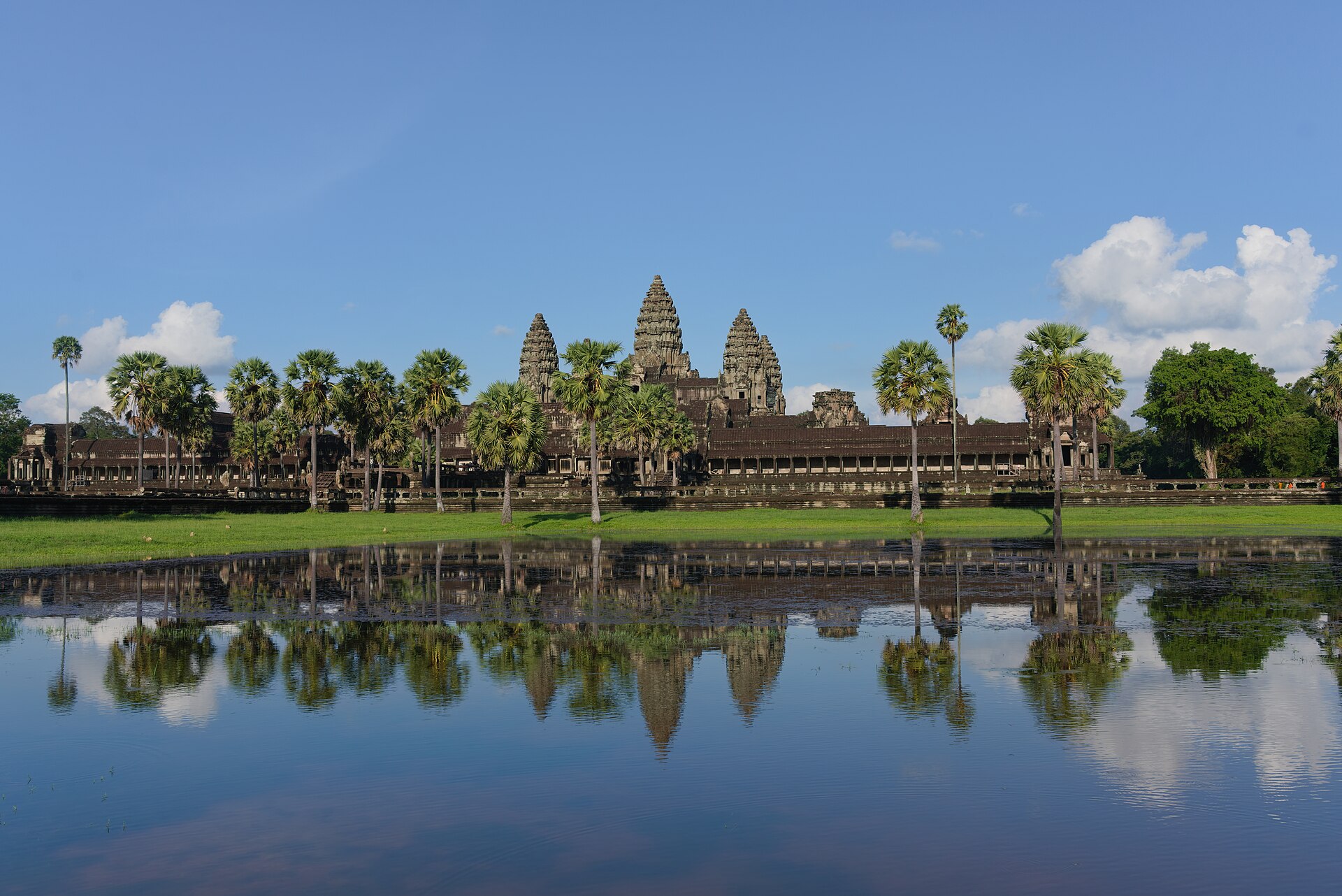
Lead photograph: Angkor Wat reflected in the water, Cambodia. Photograph: Satdeep Gill, 2022. Wikimedia Commons source · CC BY-SA 4.0. Web-size image supplied by Wikimedia Commons; no edits by Enlighten Chakra.

SACRED PLACES & ANCIENT SANCTUARIES · HISTORY, FACTS & ROUTES · CHECKED 22 OCTOBER 2026
A carved corridor in Cambodia. A hilltop in Kyoto. A row of enormous columns in Luxor. A temple visit becomes more memorable when you know what you are looking at—and leave time to notice it. These ten places span ten countries and several religious traditions.
This selection includes living Hindu and Buddhist temples, a historic imperial ritual complex, and ancient Egyptian and Greek sanctuaries. Their access rules and purpose differ; visitors should not assume that every monument is an active place of worship.
How to use this guide: The routes and time allowances below are editorial suggestions in local time, starting from the listed base. They are not published opening hours, transport timetables, or personal-visit reports. Move them to match your actual ticket, daylight, weather and confirmed local services. Meals are suggested areas and breaks, not tested restaurant endorsements.
Choose your starting point
| Destination | Country | Suggested base |
|---|---|---|
| Angkor Wat | Cambodia | Siem Reap |
| Borobudur | Indonesia | Borobudur village or Yogyakarta |
| Brihadisvara Temple, Thanjavur | India | Thanjavur, Tamil Nadu |
| Kiyomizu-dera | Japan | Kyoto |
| Bulguksa Temple | South Korea | Gyeongju |
| Temple of Heaven | China | Beijing |
| Pashupatinath | Nepal | Kathmandu |
| Temple of the Sacred Tooth Relic | Sri Lanka | Kandy |
| Karnak Temple Complex | Egypt | Luxor |
| Temple of Apollo at Delphi | Greece | Delphi town; alternatively a long day trip from Athens |
1. Angkor Wat — Cambodia
Cross the causeway slowly—the approach is part of the experience.
Setting: Khmer temple; Hindu origins and Buddhist worship
Start from: Siem Reap
Allow: 2–3 nights in Siem Reap; give the main temple at least half a day
History: Angkor preserves the capitals of the Khmer Empire from the ninth to fifteenth centuries. Angkor Wat sits within this much larger archaeological landscape, rather than being an isolated monument.
A fact to remember: The protected Angkor park extends over roughly 400 square kilometres, including forest. Bayon and Angkor Wat are different temples within the same wider landscape.
Suggested visit plan: Day 1: 06:30 breakfast in Siem Reap; 07:15 depart with prearranged transport; spend the morning at Angkor Wat’s galleries and courtyards. At 12:00 pause for lunch at a permitted visitor-area restaurant, then return for a heat break. Day 2: visit Bayon and choose one further temple rather than trying to complete every circuit.
Breakfast and lunch: Choose breakfast near your accommodation; confirm vegetarian preparation directly if needed. Take drinking water and use designated eating areas.
Before you book or enter: Buy the appropriate Angkor pass through Angkor Enterprise. Cover shoulders and knees, and respect sacred areas and closed stairways. A sunrise start needs a separately planned early departure; it is not included in this sample.
History and heritage source → · Visitor information and planning →
2. Borobudur — Indonesia
The reward is in the reliefs as well as the skyline of stupas.
Setting: Buddhist monument
Start from: Borobudur village or Yogyakarta
Allow: 1 night near Borobudur, or a full-day trip from Yogyakarta
History: Built in central Java in the eighth and ninth centuries, Borobudur arranges Buddhist architecture in ascending levels. A major restoration received UNESCO support in the 1970s.
A fact to remember: Seventy-two perforated stupas surround the circular upper platforms. The monument’s square terraces and circular levels are deliberately different parts of its design.
Suggested visit plan: 07:00 breakfast near your hotel; transfer with enough buffer for your booked entry. Spend the first part of the visit studying the lower reliefs with a guide. Use the upper-structure session only if your ticket includes it. Around 12:30 have lunch in Borobudur village, then choose a village walk or return to Yogyakarta.
Breakfast and lunch: Eat before the booked session and choose a village restaurant afterwards. Do not treat the monument itself as a picnic venue.
Before you book or enter: The official seller distinguishes courtyard access from a ticket allowing you onto the temple structure. Book the experience you actually want and follow current footwear, guide and session instructions. A general grounds ticket is not a climbing ticket.
History and heritage source → · Visitor information and planning →
3. Brihadisvara Temple, Thanjavur — India


Stand back before walking in—the scale is easier to appreciate from the courtyard.
Setting: Living Hindu temple dedicated to Shiva
Start from: Thanjavur, Tamil Nadu
Allow: 1–2 nights; a half-day temple visit plus local heritage
History: Rajaraja Chola I’s great temple was completed in 1010. It belongs to the UNESCO-listed Great Living Chola Temples, alongside the sites at Gangaikondacholapuram and Darasuram.
A fact to remember: The World Heritage listing brings together three temples, not one. Their surviving architecture, inscriptions and art offer a route into the history of Chola power and patronage.
Suggested visit plan: 07:00 breakfast in central Thanjavur; visit during a confirmed morning opening, leaving time for worship and the courtyard architecture. Around 11:30 stop for a South Indian lunch in town. In the afternoon, choose the palace and museum area if open. Reserve the other Chola temples for another day with road transport.
Breakfast and lunch: A local breakfast and a vegetarian meals restaurant make a practical starting point; confirm serving times and dietary needs before sitting down.
Before you book or enter: Respect shoe-removal, sanctum access and photography instructions. Recheck worship hours and any midday closure instead of assuming continuous tourist access. Avoid packing all three UNESCO temples into a rushed half-day.
History and heritage source → · Visitor information and planning →
4. Kiyomizu-dera — Japan


A quiet early visit lets the hillside setting do the talking.
Setting: Living Buddhist temple
Start from: Kyoto
Allow: 2–3 hours at the temple; half a day in Higashiyama
History: The temple traces its founding to 778 and has been a place of devotion to Kannon for more than twelve centuries. It is part of the wider historic Kyoto heritage landscape.
A fact to remember: Kyoto’s UNESCO listing covers a collection of monuments across Kyoto, Uji and Otsu. Kiyomizu-dera should not be confused with the entire listing.
Suggested visit plan: 06:30 light breakfast or a packed snack eaten before entering; aim for an early visit using the temple’s confirmed opening schedule. Explore the Main Hall area and permitted paths. Around 10:00 descend through Higashiyama’s shopping lanes. Have lunch there around 12:00, then continue toward Gion at an unhurried pace.
Breakfast and lunch: Early cafes may not yet be open; your hotel is the safer breakfast plan. Eat only at cafes or tea houses on temple grounds.
Before you book or enter: The temple states a 06:00 opening, with closing times varying by season and events. Check its accessibility map for a step-free route. Keep voices low; do not assume night-viewing events operate every evening.
History and heritage source → · Visitor information and planning →
5. Bulguksa Temple — South Korea
Look at the stonework before looking for the next photograph.
Setting: Living Buddhist temple
Start from: Gyeongju
Allow: 2 nights in Gyeongju; half to a full day for this area
History: Bulguksa and nearby Seokguram belong to the Buddhist heritage of the eighth-century Silla world. UNESCO treats the temple and grotto as a linked religious architectural complex.
A fact to remember: Seokguram is a separate destination on Mount Toham, not a chamber inside Bulguksa. Its monumental Buddha is one reason to allow time for both sites.
Suggested visit plan: 07:30 breakfast in Gyeongju; travel to Bulguksa for a confirmed morning opening. Spend the morning around the stone pagodas and courtyards. Around 12:00 lunch near the temple approach. If transport, weather and openings permit, visit Seokguram afterwards; otherwise return for Gyeongju’s central heritage district.
Breakfast and lunch: Use the temple-approach dining area for lunch, but check menus rather than assuming every nearby restaurant serves temple food.
Before you book or enter: Allow separate travel time for Seokguram. Respect prayer halls and photography restrictions, and verify accessible approaches before booking for someone who cannot manage steps. Keep the evening flexible instead of adding distant sites.
History and heritage source → · Visitor information and planning →
6. Temple of Heaven — China
Come for the celebrated hall, then notice how the whole landscape fits together.
Setting: Historic imperial ritual complex
Start from: Beijing
Allow: Half a day; allow extra time for gardens
History: Founded in the first half of the fifteenth century, the complex expresses the relationship between heaven, earth and imperial authority. It served ceremonial purposes rather than functioning like a modern neighbourhood shrine.
A fact to remember: The park and its ticketed landmark buildings have different access arrangements. An open park gate does not guarantee an open Hall of Prayer for Good Harvests.
Suggested visit plan: 07:00 breakfast near your Beijing hotel; reach the park in the morning and time landmark visits to their separate opening hours. Follow a measured route through the Hall of Prayer, Echo Wall and Circular Mound areas when included in your ticket. Around 12:30 leave for lunch in the surrounding Dongcheng area.
Breakfast and lunch: Have breakfast before travelling. Plan lunch outside the main monument circuit so a food search does not interrupt your booked visit.
Before you book or enter: The Beijing government lists Monday closures for the principal scenic buildings, except statutory holidays. Check the combined-ticket coverage and passport-linked booking instructions. Avoid planning a Monday building visit just because the surrounding park is open.
History and heritage source → · Visitor information and planning →
7. Pashupatinath — Nepal
This is a place of devotion and life-cycle rituals, not a backdrop to rush through.
Setting: Living Hindu temple dedicated to Shiva
Start from: Kathmandu
Allow: Half a day; longer if combining another Kathmandu site
History: Pashupatinath is one of the sacred ensembles within Kathmandu Valley’s UNESCO listing. The temple trust dates the present main temple to 1697, while worship at the site has a longer history.
A fact to remember: The Bagmati riverfront is an active ritual setting. The wider precinct and the restricted main shrine are different visitor spaces.
Suggested visit plan: 07:30 breakfast at your Kathmandu hotel; arrange transport and confirm access at the entrance. Spend the morning in the areas you are permitted to enter, allowing space for worshippers. Around 12:00 lunch outside the sacred precinct. A visit to Boudhanath can be an afternoon option, with traffic buffer between the two.
Breakfast and lunch: Choose a restaurant outside the ritual area and confirm vegetarian requirements. Avoid treating the ghats as a snack or picnic stop.
Before you book or enter: The main shrine is restricted to Hindus; other visitors should use permitted precincts and viewpoints. Follow staff decisions. Do not photograph funerals, grieving families or private rituals without permission.
History and heritage source → · Visitor information and planning →
8. Temple of the Sacred Tooth Relic — Sri Lanka
Give the ritual atmosphere as much attention as the decorated buildings.
Setting: Living Buddhist pilgrimage temple
Start from: Kandy
Allow: 1–2 nights; half a day around the temple and lake
History: The temple stands in Kandy, the last capital of the Sinhala kings before British occupation in 1815. It is a pilgrimage centre associated with a relic venerated as a tooth of the Buddha.
A fact to remember: Kandy’s World Heritage recognition concerns the sacred city, not only a single shrine. The temple’s connection with the former royal centre helps explain its wider importance.
Suggested visit plan: 07:00 breakfast near your Kandy accommodation; plan entry around a confirmed public visiting period or ritual session. Allow time for security and shoes. Around 11:30 pause for lunch in central Kandy. Continue with a relaxed lake walk and, if open, a nearby museum rather than immediately leaving for another city.
Breakfast and lunch: Breakfast at your hotel avoids searching during an early ritual visit. Keep lunch outside the worship areas.
Before you book or enter: Dress respectfully with shoulders and knees covered and follow shoe-removal rules. Verify the current ritual schedule; attending a session is not a promise that the relic itself will be visible. Festival periods require a separate crowd and transport plan.
History and heritage source → · Visitor information and planning →
9. Karnak Temple Complex — Egypt
Walk between the columns, then stop and look upwards.
Setting: Ancient Egyptian temple ruins
Start from: Luxor
Allow: 2–3 nights in Luxor; half a day at Karnak
History: Karnak formed part of ancient Thebes, the city associated with Amun and a capital during Egypt’s Middle and New Kingdoms. The complex grew through contributions by successive rulers.
A fact to remember: Karnak is a collection of temples and chapels. It is separate from Luxor Temple, even though both belong to the ancient Theban landscape.
Suggested visit plan: 06:30 breakfast at your Luxor hotel; enter Karnak at a confirmed early opening to reduce time in the strongest heat. Follow the principal temple axis with a knowledgeable guide. Around 11:30 return for lunch and a rest. Save Luxor Temple for a separate afternoon or evening visit only if its current schedule permits.
Breakfast and lunch: Eat in Luxor before entering and return to a town restaurant or hotel for lunch. Carry water rather than relying on a particular stall being open.
Before you book or enter: Use the ministry page for ticket coverage, current hours and separately ticketed areas. The open stone surfaces and long walks call for sun protection and sensible footwear. Do not add the West Bank tombs to this already substantial half-day.
History and heritage source → · Visitor information and planning →
10. Temple of Apollo at Delphi — Greece
The mountain setting explains why the sanctuary still feels like a destination.
Setting: Ancient Greek sanctuary ruins
Start from: Delphi town; alternatively a long day trip from Athens
Allow: 1 night locally for an easier pace
History: Delphi was a pan-Hellenic religious centre associated with Apollo’s oracle. By the sixth century BCE, it held a significant place in the shared religious world of ancient Greece.
A fact to remember: The omphalos symbolised Delphi as the world’s centre in ancient belief. That is a historical religious idea, not a geographical claim.
Suggested visit plan: 07:30 breakfast in Delphi town; visit the archaeological slopes during a confirmed morning opening. Allow time for the Temple of Apollo remains and other accessible monuments. Around 12:30 lunch in town. Spend the afternoon in the archaeological museum, checking its last-entry time before a leisurely return.
Breakfast and lunch: A town bakery or hotel breakfast works before the uphill visit; choose a seated lunch afterwards instead of eating among the ruins.
Before you book or enter: Book through the official Greek ticketing channel and check whether your purchase includes both site and museum. Paths can be steep and uneven. An Athens day trip needs a much earlier departure and less sightseeing elsewhere.
History and heritage source → · Visitor information and planning →
Turn a destination idea into a workable trip
Book in the right order. Check the official site’s dated access rules, then secure any restricted entry or required guide before finalising transport around it. Leave room for queues and local travel rather than connecting a site exit directly to a flight.
Choose the season for your goal. A waterfall’s volume, an island boat trip, a mountain walk and a temple festival call for different conditions. Use the visitor links to check the period you want; there is no single worldwide best travel month.
Make the budget complete. Account for accommodation, local transport, entry, guides, meals and any separately booked activities. Fees and exchange rates change, so this guide does not invent an all-inclusive rupee total.
At sacred sites: Follow local dress, shoe-removal, photography and worship instructions. Give ceremonies and mourners privacy. Religious traditions are identified as beliefs or practices rather than presented as experimentally proven events.
For international travel from India: Check your passport, destination and transit entry requirements with the relevant official authorities for your dates. The suggested local stays exclude international travel days; do not treat them as total holiday durations.
Explore another kind of journey
Explore 10 remarkable places around the world →
Plan a two-day Vadodara break → · Explore museum days in India →
Which place would you build a trip around? Share your choice in the comments, and subscribe for new travel guides.
Sources: heritage bodies, site managers and official tourism sources are linked beside each destination. This is a researched planning feature, not a record of personal visits. Prices, opening hours and access can change. Editorial policy.
Leave a Reply