
CURIOUS TRAVELS · CHAPTER 1 OF 5 · RESEARCHED 23 OCTOBER 2026
Start with a stone village, a cliffside ruin or a waterway. This chapter favours one slow, well-planned visit over a race across ten countries.
A village-led trip works well when you stay locally and walk before the main excursion rush. These ten places are separate itinerary ideas, not a route to complete in one holiday.
About the “secret spots”: these are lesser-known choices and quieter corners of some established destinations, not a claim that they are undiscovered or empty. Suggestions use public or authorised visitor routes; conditions can change.
Choose your stop
1. Albarracín · 2. Piódão · 3. Gjirokastër · 4. Biertan · 5. Rocamadour · 6. Bardenas Reales · 7. Val d’Orcia · 8. Dunluce Castle · 9. Giethoorn · 10. Klaksvík
1. Albarracín — Spain
The curiosity: Its walls extend well beyond the compact historic centre: the defences tell a larger story than the village first suggests.
Suggested visit: Base yourself in Albarracín, or arrive from Teruel with your return arranged. After breakfast, give the old town a slow morning: Plaza Mayor, the cathedral surroundings and the lanes beneath the walls. Stop for lunch in the town rather than rushing straight back to the car.
A quieter corner: Follow the signed Guadalaviar riverside walk when conditions allow. Looking back at the village from below gives a different sense of its rocky setting.
Timing and access: Allow a full day. Choose comfortable walking weather; cobbles, stairs and wall approaches are uneven. Check monument entry and path notices locally; do not climb unmarked defensive structures.
Source and visitor checks: Tourism in Albarracín. What to see. Tourist information | spain.info.
2. Piódão — Portugal
The curiosity: The dark schist houses climb the mountain in tiers, while a white church interrupts the village’s otherwise earthy palette.
Suggested visit: Stay in Piódão or use Arganil as a base. Drive the mountain approach in daylight. Begin at the church square, work gently uphill through the stepped lanes, then return for lunch and a visit to the village museum if open.
A quieter corner: Take time over the upper public lanes and small architectural details rather than only the standard postcard viewpoint. Doorways and gardens remain private.
Timing and access: Plan a relaxed half-day or an overnight stay. Mountain roads and steep lanes deserve time, especially in rain. Confirm parking and museum hours; do not assume the whole village is step-free.
Source and visitor checks: Piódão • Center of Portugal.
3. Gjirokastër — Albania
The curiosity: The ‘City of Stone’ preserves distinctive merchant houses and an Ottoman-era townscape on a steep hillside.
Suggested visit: Stay near the old bazaar if you are comfortable with hills. Start after breakfast at the bazaar, climb to the castle while your legs are fresh, then return for lunch. Choose one publicly open house museum for the afternoon instead of trying to enter every historic doorway.
A quieter corner: The public lanes branching away from the main bazaar reward a slower walk: look at rooflines, stonework and the relationship between houses and slope.
Timing and access: Give it one or two days. The stone paving becomes slippery when wet. Verify castle and house-museum entry, and ask before photographing residents or entering courtyards.
Source and visitor checks: Gjirokastër – Official Tourism Website.
4. Biertan — Romania
The curiosity: Its fortified church belongs to the UNESCO-listed Transylvanian village tradition, where religious buildings also helped organise community defence.
Suggested visit: Use Biertan for an overnight pause or visit from Sighișoara with transport planned. Begin with the church enclosure when open, study the layers of walls and passages, then have lunch in the village. Walk the surrounding public streets before leaving.
A quieter corner: Look back towards the church from village level. Seeing houses and defences together explains more than a close-up photograph of the tower.
Timing and access: Allow half a day. Verify church opening and any guide arrangements before travelling; a World Heritage inscription does not guarantee daily access to every interior. Keep to public lanes around working farms.
Source and visitor checks: Villages with Fortified Churches in Transylvania – UNESCO World Heritage Centre.
5. Rocamadour — France
The curiosity: The settlement rises in layers above the Alzou valley: village streets, sanctuaries and high defensive structures share one cliffside setting.
Suggested visit: Stay nearby and begin early, before the busiest excursion period. Explore the lower village, take the signed route towards the sanctuary, pause respectfully at the chapels, then plan lunch before an afternoon viewpoint stop. Use official lifts where operating if the stairs are unsuitable.
A quieter corner: Linger on the lower public street and permitted valley-facing viewpoints rather than treating the sanctuary as a quick photo stop.
Timing and access: Allow a full day. This is a major pilgrimage destination, so ‘quiet’ is relative. Check lift access, service times and parking; avoid interrupting worship or assuming all paths suit limited mobility.
Source and visitor checks: Rocamadour | Visit Dordogne Valley.
6. Bardenas Reales — Spain
The curiosity: Wind and water have shaped badlands in Navarre, creating a landscape that can feel strikingly different from the greener north of Spain.
Suggested visit: Use Tudela or Arguedas as your base. Start at the visitor information point and follow the currently authorised driving or cycling circuit. Pick only the signed stopping places, carry a picnic and water, and return to town for a late lunch rather than improvising cross-country shortcuts.
A quieter corner: A short authorised walk near a designated stop can reveal layers, textures and changing light that are missed from a moving vehicle.
Timing and access: Choose a cool, dry day. Routes may close for conservation, weather or other operational reasons. Check park notices and stay off fragile formations; do not interpret an attractive track as permission to enter.
Source and visitor checks: Bardenas Reales Biosphere Reserve | Visit Navarra – Official Website of the Navarre Tourist Board.
7. Val d’Orcia — Italy
The curiosity: These Tuscan hills are a cultural landscape: farming, settlements and Renaissance ideas helped shape the views visitors admire.
Suggested visit: Choose one village base, such as San Quirico d’Orcia or Pienza, rather than racing around the valley. Spend the morning in one town, lunch there, then use a public road to reach a second village or an official walking route. A two-day stay leaves room to stop properly.
A quieter corner: Explore the public back lanes of a village after the main square. Everyday stonework, small shops and changing views can be more rewarding than queuing at a famous photo location.
Timing and access: Spring and autumn often suit walking, but check the forecast for your dates. Cypress lanes, farm tracks and fields may be private; park only where permitted.
Source and visitor checks: Val d’Orcia | Visit Tuscany.
8. Dunluce Castle — Northern Ireland
The curiosity: The ruined castle and the remains of Dunluce Town reveal both a powerful stronghold and a community that once grew beside it.
Suggested visit: Stay in Bushmills or elsewhere on the Causeway Coast. Begin with the visitor entrance and the castle’s open areas, then give the interpretation panels and any accessible town archaeology time. Plan lunch in Bushmills and keep the afternoon flexible for the coast rather than forcing a long walk in bad weather.
A quieter corner: Focus on the archaeological story of the former town, not only the familiar cliff-edge silhouette.
Timing and access: Allow a half-day around the castle, longer for the coast. Confirm opening and weather restrictions. Remain inside visitor boundaries; cliff edges outside the managed route are not extra viewpoints.
Source and visitor checks: Dunluce Castle | Department for Communities.
9. Giethoorn — Netherlands
The curiosity: Waterways, bridges and thatched houses make the village memorable; the quiet electric ‘whisper boat’ is part of its visitor experience.
Suggested visit: Stay in the area or travel through Steenwijk with onward transport checked. Start with a public footpath walk, take a licensed boat trip or properly briefed rental, and have lunch before a second, shorter walk. Keep bags compact: the pleasure here is moving slowly.
A quieter corner: Ask the visitor office for a less busy public walking loop beyond the main boat-loading area. Do not confuse residents’ bridges and gardens with visitor paths.
Timing and access: Choose a weekday outside major holidays if possible. It is popular rather than undiscovered. Check boat conditions, parking and navigation instructions, and keep waterways and residential access clear.
Source and visitor checks: Giethoorn – the water village of the Netherlands | Official website.
10. Klaksvík — Faroe Islands
The curiosity: This northern-islands town is a useful base for exploring a landscape of harbours, steep green slopes and inter-island connections.
Suggested visit: Stay in town and begin with breakfast and a stop at Visit North. Walk the harbour, then choose one modest outing that suits the day’s wind and visibility. Return for lunch before adding a museum or another public town walk. Keep a spare day if your plan depends on a ferry.
A quieter corner: The public park Úti í Grøv offers a gentler alternative to chasing a dramatic summit photograph. Ask locally about its paths and current conditions.
Timing and access: Allow two nights rather than a rushed connection. Weather changes quickly; verify ferries, any hiking fees and land access. Do not continue onto an exposed route just because it appears on an older map.
Source and visitor checks: Home – VisitNorth.
Make the idea work for your dates
These routes are editorial planning suggestions, not live timetables or bookings. Recheck official opening hours, tickets, permits, weather, local travel advice and return transport. Choose accommodation and meal stops that confirm they are operating. Carry appropriate supplies for remote outings and ask locally about accessibility.
Respect residents and custodians. Stay on permitted routes, ask before photographing people, leave archaeological objects and natural formations in place, and use local guides where required. A quieter visit never justifies trespassing or entering a closed area.
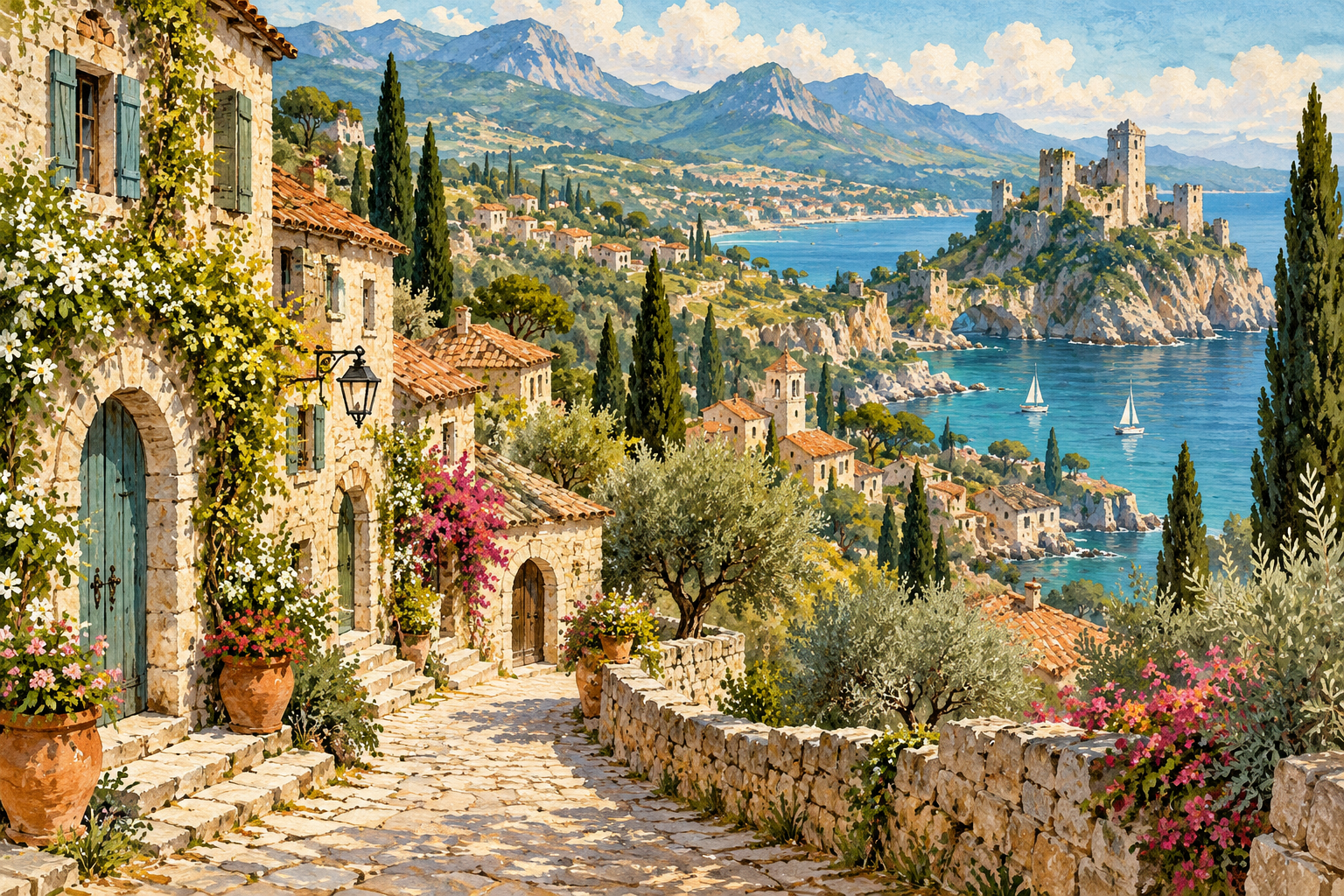
Cover artwork is an original generated illustration combining regional motifs. It is not a photograph, map or exact depiction of any listed location. The source links show the real places.
Leave a Reply