
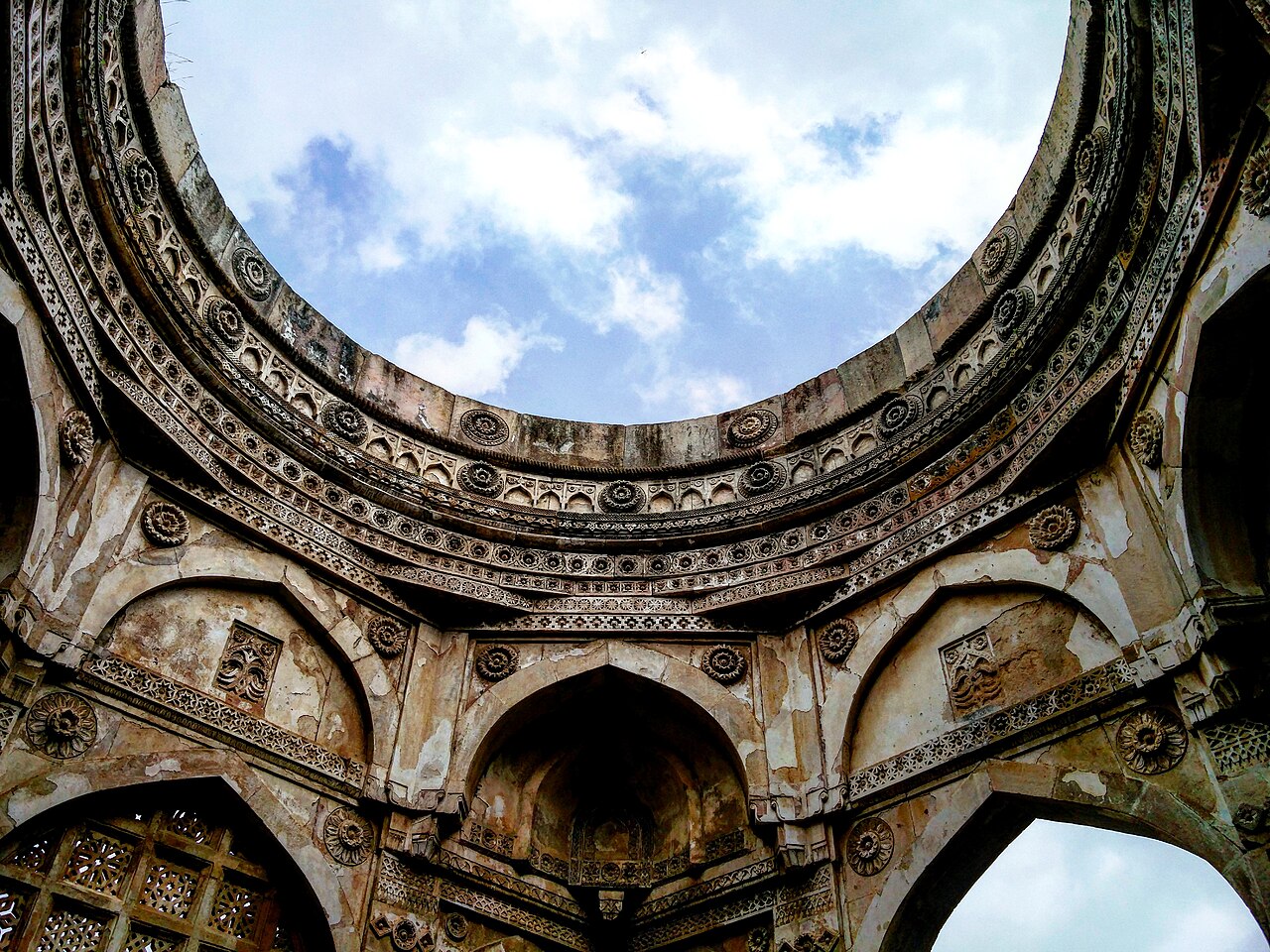
Interior arches and decorated ceiling at Jami Masjid, Champaner. Photograph: Harshalgandhi5. Wikimedia Commons source · CC BY-SA 4.0. Web-size image supplied by Wikimedia Commons; reproduced without edits by Enlighten Chakra.

Research-based travel guide · Sources checked 29 October 2026
Champaner–Pavagadh in Gujarat combines archaeological remains with a living pilgrimage landscape. UNESCO inscribed the property in 2004. A good first plan distinguishes the historic sites around Champaner from any intended hill visit, rather than treating the whole area as a single quick stop.
Why the landscape matters
UNESCO describes a property containing fortifications, religious buildings, residential remains and water installations across separate areas. Its history includes an early hill capital and a later Gujarat sultanate capital. The Jama Masjid is an important architectural example, while Kalika Mata on Pavagadh remains an active shrine.
Choose your main purpose
Decide whether your priority is architecture, archaeology, pilgrimage or a combination. A visitor focused on the historic city may want a different schedule from someone whose main aim is the shrine. If combining both, verify each part’s access and transfers separately before deciding how much fits your day.
A suggested heritage sequence
Start with an official map or a locally verified route. Choose a small group of accessible monuments and give each time for observation and interpretation. Look for the relationship between water, settlement and defence rather than viewing the remains as disconnected photographic stops.
Treat the hill as its own outing
Check current arrangements with the relevant operator or site authority, including the route, operating hours and any accessibility limitations. Do not infer ropeway availability, queue length or an easy ascent from a general destination description. Leave a realistic margin before any fixed return journey.
Respect living worship and protected remains
Follow the current instructions at religious sites, ask before photographing people and stay within permitted areas. Archaeological interest does not override worshippers’ use of the place. Avoid climbing structures or leaving marked routes to obtain a photograph.
Keep the booking checks practical
Confirm transport, admission to the individual places you want to enter and any current restrictions close to the visit. This article does not establish live ticket prices, a guaranteed day-long route or present operating conditions. Our recommendation is a shorter verified plan rather than a long list built around assumptions.
Heritage source: UNESCO World Heritage Centre. Suggested sequencing is editorial guidance; check live arrangements with the responsible operator.
Continue with our travel guides or enquire about itinerary research.
Leave a Reply