
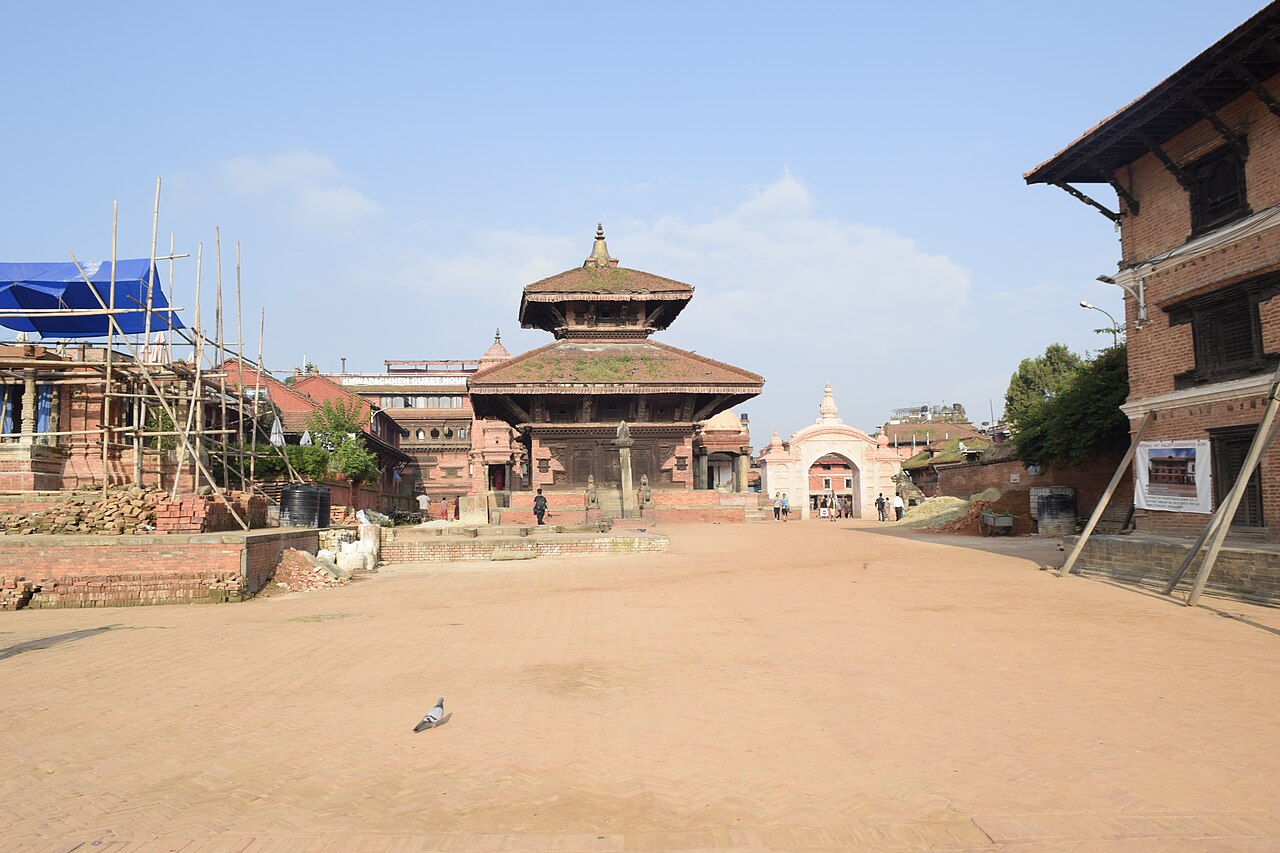
Bhaktapur Durbar Square. Photograph: Suzalgurungz, 2017-09-09 07:36:00. Wikimedia Commons, CC BY-SA 4.0. Source web-size image; no crop, colour adjustment or retouching by Enlighten Chakra.

A first visit to Bhaktapur can become a long list of temples whose names blur together by the end. Try choosing two places with different purposes. Use Durbar Square to understand the relationship between buildings and public space, then Taumadhi to look closely at one temple’s form.
This is a suggested way to organise your attention, not a timed walking tour. Check a current local map and visitor information before deciding the exact route between stops.
First, know which heritage site you are visiting
UNESCO’s Kathmandu Valley listing includes Bhaktapur Durbar Square among seven monument zones. Bhaktapur is one part of that wider property, alongside places including the Durbar Squares of Kathmandu and Patan. Do not turn the whole valley into a single day’s checklist simply because the places share a listing.
Choose Bhaktapur as a visit in its own right. Mark your arrival point, where you need to return and a realistic stopping time. Then check current entry arrangements locally. Historical photographs and old ticket descriptions are useful background, but they do not establish today’s rules or access.
Durbar Square: look at the spaces between buildings
Begin at a permitted public point where you can take in more than one building. Notice what faces the square, where routes enter it and how people use the space. A photograph of a single façade can miss those relationships.
Give yourself one simple task: draw the outline of the space and mark three things you can identify from reliable signs or a guide. Leave unfamiliar structures unnamed until you check them. This makes your notes useful without turning observation into guesswork.
Taumadhi: change the scale of your attention
Nepal Tourism Board’s Cultural Treasures of Nepal guide identifies Taumadhi Square with the five-storeyed Nyatapola Temple, built in 1702. Use that as a second kind of looking: move from a group of buildings to the relationship between a temple’s base, stairway and rising roof levels.
From a permitted viewpoint, trace the outline with your eyes before taking a photograph. Ask how the base contributes to the impression of height. You do not need to climb temple steps to study the overall form, and visitor access should never be assumed from a staircase being visible.
| Stop | Give your attention to | Take away |
|---|---|---|
| Durbar Square | How buildings frame public space | A rough plan and three verified labels |
| Taumadhi | How the temple’s parts work together | One explanation of scale or proportion |
| A break | What you want to understand next | One question for a local guide or reliable source |
Keep religious and everyday uses in view
Follow posted instructions about entry, shoes, dress and photography at each site. Ask before photographing people at close range, and keep clear of worship and other local activity. An attractive doorway may belong to a home or a restricted space.
If you want to see a craft activity or enter a workshop, look for a clear welcome and ask what visitors may do. Watching, taking photographs and handling objects are different permissions. Leave enough time to listen rather than treating someone’s work as a passing photo opportunity.
Decide what to leave for another visit
A satisfying first visit can consist of these two squares, a proper break and one additional stop chosen after you arrive. Check weather, current local advisories and the return journey before extending the plan. Ask specifically about steps and surfaces if accessibility matters.
For another town where temples belong to a larger streetscape, see the Luang Prabang guide. Keep your sketches and questions in our two-page city-break journal.
Source note: heritage context and the named temple were checked against UNESCO and Nepal Tourism Board material on 31 October 2026. The observation plan is editorial guidance; it does not confirm current entry fees, opening hours or route conditions.
Leave a Reply