
Technology briefing · Sources checked 31 October 2026. An October research update separates operating temperatures from survival limits.
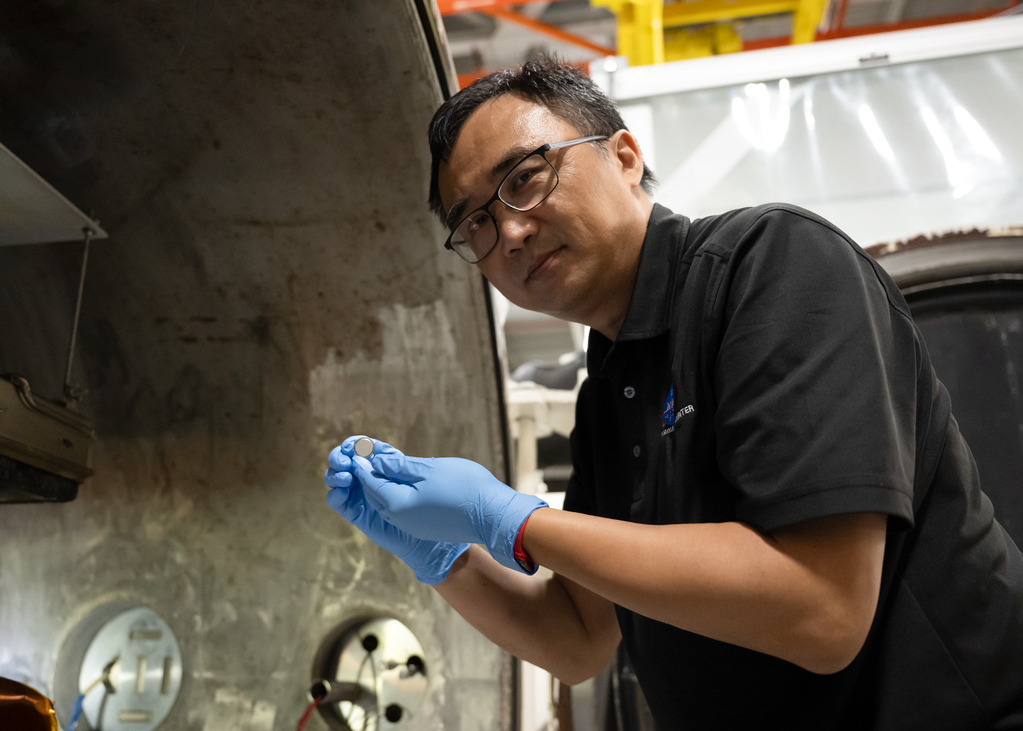
Lead image: NASA / Ryan Hill. Yi Lin holds a SPEARS coin-cell battery following thermal-vacuum testing at NASA Langley. Published in NASA’s 14 October 2026 research report. Reproduced unchanged. Official image and report source.
The technology being tested
NASA’s 14 October 2026 update describes SPEARS, a solid-state battery research project for harsh space environments. It replaces a liquid electrolyte with a ceramic- or polymer-based solid. The work aims to support future lunar equipment, rather than announce a battery already operating on the Moon.
Read the temperatures carefully
NASA reports that small prototype cells worked well from −60°C to 80°C and delivered reduced performance at −80°C. Separate exposure tests ranged from −170°C to 100°C without damage. Surviving −170°C does not mean delivering electricity at that temperature: NASA says warming is needed before operation after extreme cold.
Why that difference matters
Our reading: an operating range tells you when a cell can do useful work; a survival range tells you what conditions it can endure before returning to service. Treating those figures as interchangeable makes a laboratory result sound more mature than it is. When comparing battery announcements, write down both ranges and the test conditions beside them.
Where the work could lead
NASA identifies potential uses including rover power, tools, scientific instruments and astronaut emergency packs. It says NASA Ames is developing test boards and electronics to help prepare the cells for spaceflight testing. These are development activities, not evidence of a finished commercial product.
What to watch next
We would look for larger packs, repeatable charge-and-discharge results, system-level thermal tests and evidence from a relevant flight environment. A useful battery assessment needs to consider the heaters, electronics and enclosure alongside the cell. This research offers a promising direction, but this report does not establish a consumer launch date or an independently tested product recommendation.
Sources and further reading
Read the full official announcement. Reporting above is based on this primary source; paragraphs marked as our reading and the watch points are editorial analysis. This is an announcement-based explainer, not a hands-on test.
Leave a Reply