
Jane Austen · Social comedy / classic romance · Updated 1 November 2026

Linked edition: Paperback · ISBN 9781481274951. Amazon US listing: 1481274953.
Affiliate disclosure: As an Amazon Associate I earn from qualifying purchases.
View Pride and Prejudice on Amazon US →
Our editorial assessment
The comedy depends on differences between what people say, what they assume and what their behaviour reveals. Let an early judgement remain provisional. A first reader may find the opening easier by tracking a few conversations rather than memorising every relationship before proceeding.
Best suited to: Readers who enjoy social observation and dialogue.
Consider another choice if: Readers wanting immediate action or a modern-language retelling.
Source-based reading assessment; we do not claim a complete reading or physical inspection of the linked edition.
Reading guide and background
Starting Pride and Prejudice can feel like entering a room where everyone already knows the neighbours. The solution is a small reading task: follow the first five chapters and notice how people form opinions. You can return to the finer points of family connections as they become relevant.
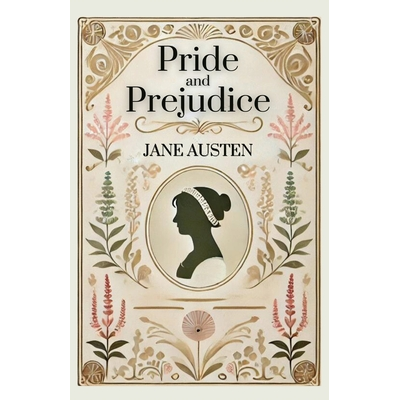
Reading note: This guide discusses the opening chapters only. The reading plan and diagram are original editorial aids; the diagram is not a published book cover.
Begin with the household, rather than a complete family tree
Jane Austen opens with the Bennet parents discussing the arrival of a wealthy tenant at Netherfield Park. Mrs Bennet immediately thinks about marriage prospects for her daughters. Mr Bennet’s replies introduce a different conversational style: teasing, withholding information and leaving other people to work out how serious he is.
For a first reading, ask what each speaker wants from the conversation. A statement can reveal a fact, a hope or an attempt to influence someone. Keeping those possibilities separate makes the dialogue easier to follow. You do not need to memorise every name before continuing.
Keep three social settings in view
| Setting | What to notice | A useful question |
|---|---|---|
| The Bennet household | Money, marriage and the parents’ different priorities | Who wants something to happen? |
| Bingley’s Netherfield circle | Connections, status and judgments about manners | Which claims come from direct observation? |
| The public assembly | Dancing, attention and first impressions | Does everyone interpret the same behaviour alike? |
Jane and Elizabeth Bennet are especially useful companions for this reading exercise. Their conversations help you see that two people can observe the same gathering and reach different conclusions. Bingley and his friend Darcy also make contrasting first impressions. Let those differences develop before deciding that one character’s account settles the matter.
Read in two sittings
First sitting: chapters 1–3. Follow the news about Netherfield, Mr Bennet’s visit and the assembly. After stopping, write three short notes: what happened, what someone believed about it, and what you still do not know. Use the chapter break as your stopping point rather than a page number, which changes between editions.
Second sitting: chapters 4–5. Watch how the social event is discussed afterwards. Jane, Elizabeth and the Lucas family help turn behaviour into reputation. Ask whether a confident judgment has gained more evidence or simply more repetition.
This is a suggested starting plan, not a reading-speed target. If the dialogue needs a second pass, reread one exchange aloud. The aim is to hear the different intentions within the conversation.
Keep a two-column note
Label the left column Observed and the right column Interpreted. On the left, record an action from the scene. On the right, record what a character thinks it means. Add the speaker’s name beside the interpretation. This keeps another person’s opinion from quietly becoming your own account of the event.
At the end of chapter five, choose one judgment you are willing to reconsider. You can carry that question into the next part of the novel without looking up the ending.
Choose an edition you can comfortably read
Compare a sample before choosing a print, ebook or audio edition. Check whether it is abridged, whether annotations interrupt the page, and whether the type or narration suits you. If avoiding spoilers matters, leave a scholarly introduction until later; introductions can discuss the whole novel.
For shared reading, agree on a chapter boundary. Our small reading-group guide can help you arrange the first discussion. You can also explore the Books & Reading collection.
Read the source
The novel details above were checked against Jane Austen’s text of Pride and Prejudice. Project Gutenberg’s edition record identifies the author and downloadable formats. Checked 31 October 2026. The reading method is our editorial interpretation.
Check this edition on Amazon US → · More Classics →
Prices, availability and delivery can change. This U.S. link does not establish availability in India.
Leave a Reply