
Sources checked 1 November 2026. A small rock found on Earth can preserve a much older planetary story. NASA’s 29 October 2026 report describes research on Teghaza 001, a Martian meteorite discovered in the Sahara in 2022. This is an explainer of the reported study, not a report of a new meteorite falling today.
NASA’s report is the primary science source. Google Trends’ India page, retrieved on 1 November, showed “martian meteorite” among its active past-24-hour search trends. That is a regional search-interest signal, not a worldwide scientific ranking or evidence that everyone was searching for this exact sample.
What the study reports
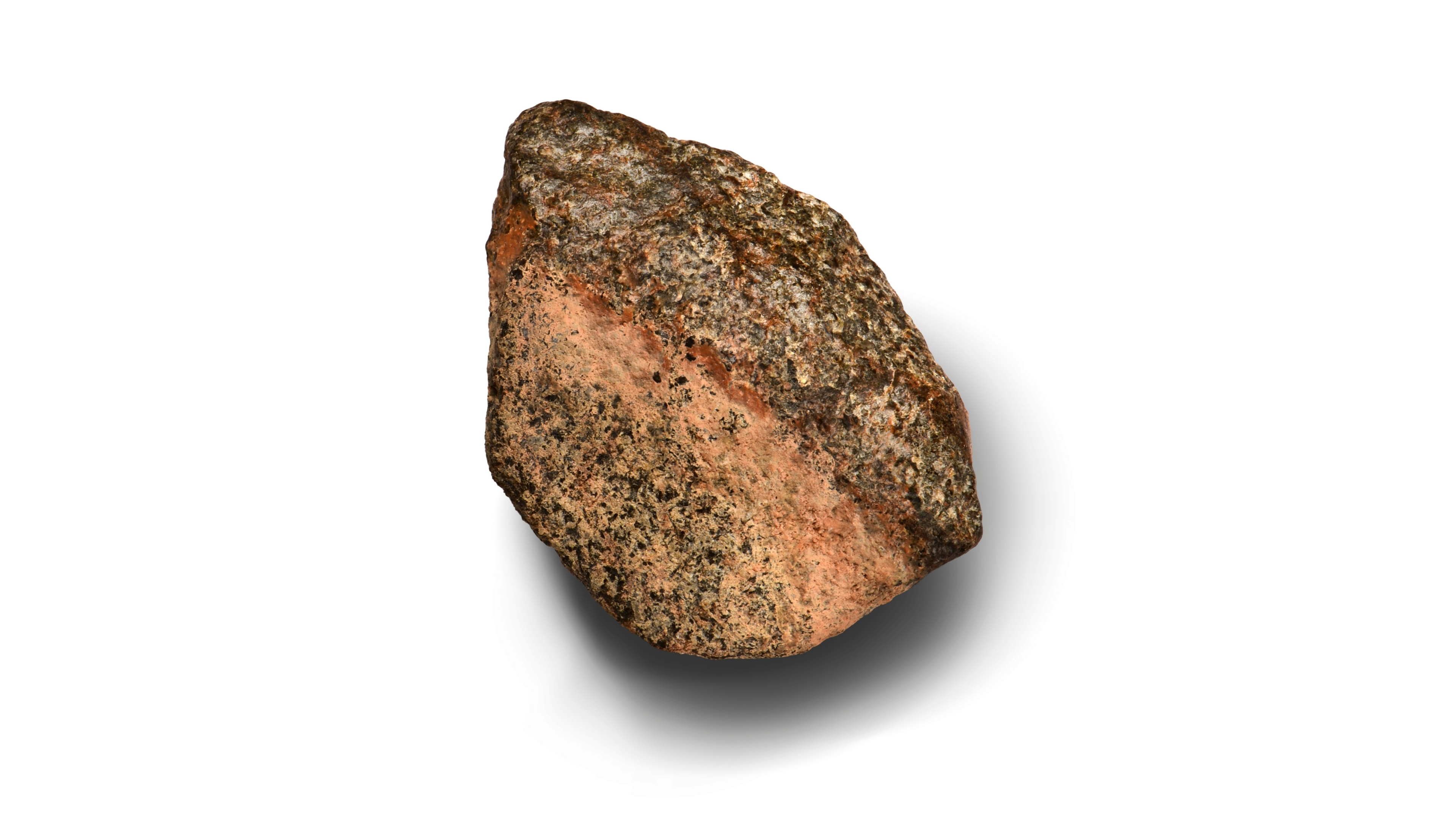
Image credit: © Darryl Pitt / Maine Mineral & Gem Museum, via NASA’s 29 October 2026 research report. Third-party copyrighted photograph, reproduced unchanged for editorial reporting; not a NASA public-domain image. Image source / edition record.
NASA research report · 29 October
NASA says researchers dated the meteorite’s minerals to more than 4.1 billion years, making it one of the oldest known Martian meteorites. The roughly 800-gram sample is named after the Teghaza salt plain in Mali. The report describes an initial characterization published in Science.
Our reading / practical checks: The useful distinction is between when a rock formed and when it was found. An ancient mineral age does not mean the rock landed on Earth at that same time. Read those events separately when interpreting a headline.
Read the official source or edition record →
Why an old sample matters
NASA describes the sample as a rare record of early Martian crust and points to earlier work on its water content. Further study could help investigate how rocks and water interacted on ancient Mars.
Our reading / practical checks: Our reading: a physical sample allows researchers to return to the same material with different questions and methods. That makes the follow-up evidence worth watching. A discussion of ancient water does not, by itself, establish ancient life; look for the precise question each study actually tested.
How to read the next headline
The story concerns a research result about an existing sample, rather than a sample newly returned from Mars by a spacecraft.
Our reading / practical checks: Check the paper date, the discovery date, what was measured and how certain the authors are. Compare a headline with the underlying result before sharing it. A rise in searches explains why a topic may be timely to cover, but it cannot establish whether a scientific claim is correct.
Source and scope
Primary report or chart used for this briefing. Chart and announcement dates are stated above. Availability and rankings can change after this check.
Google Trends India: search-interest context. The displayed trend can change during the day.
Leave a Reply