
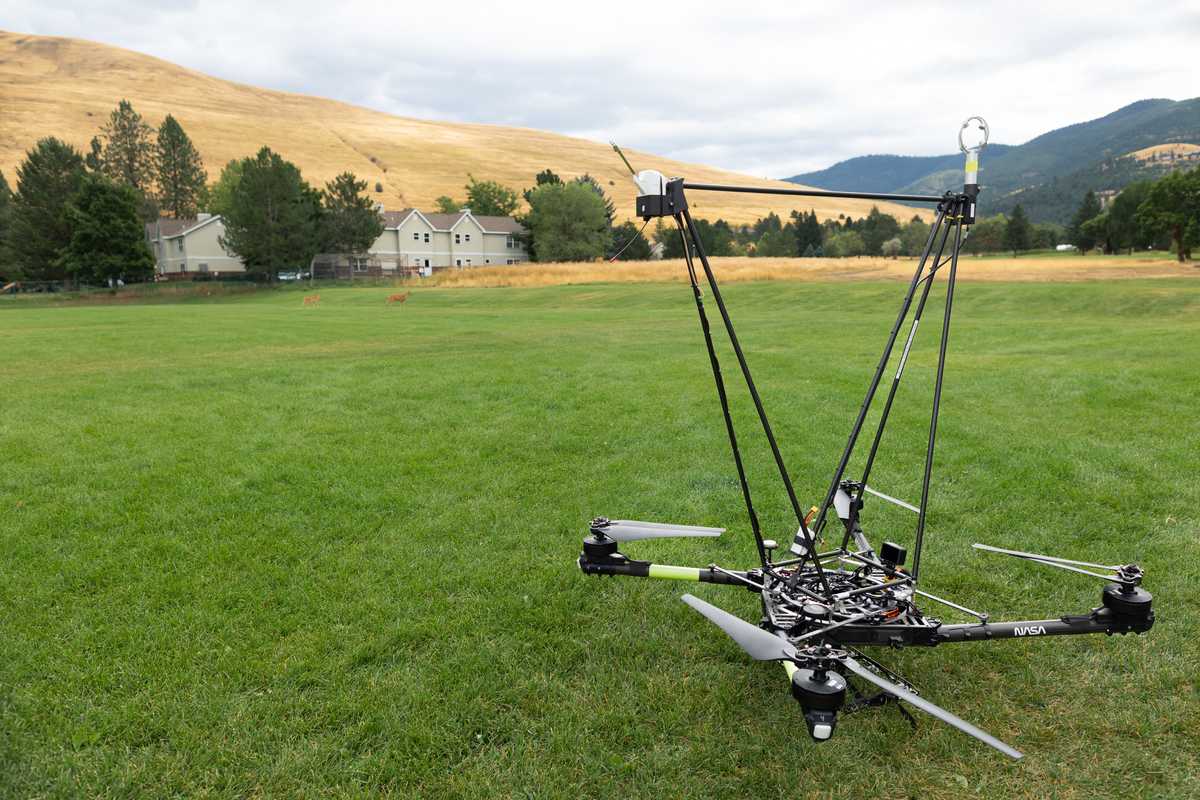
On 4 November, NASA reported a California flight test for technology that could help future landers avoid hazards on the Moon and Mars. The agency mounted a guidance and navigation payload called SPLICE on an Alta-X drone and used it during simulated lunar descent and landing manoeuvres at Rogers Dry Lake on 27 August.
What the test showed
NASA says the payload used sensor data to build a map of the ground, assess a planned landing area and divert the drone if that area was unsafe. The practical change is that the vehicle can use information gathered during descent to decide whether to continue towards its intended touchdown point.
Why fly it on a drone?
The drone lets engineers test the interaction between the sensors, guidance software and flight controls in real flight. NASA says earlier integration flights checked communications, telemetry and how the payload and aircraft exchanged commands. A simulated descent then gives the system a chance to respond to terrain under controlled conditions.
What engineers still need to verify
The test took place in Earth’s atmosphere on a drone platform. A lunar lander has different sensors, flight dynamics and operating conditions. The milestone to watch is how a specific lander integrates the system and tests it for its own descent profile, especially how it identifies hazards and chooses a reachable alternative under time and fuel constraints.
Sources
NASA Armstrong’s November test report · NASA’s SPLICE project page
Context photograph of the aircraft type during FireSense. Credit NASA Earthdata CASEI.
Leave a Reply