
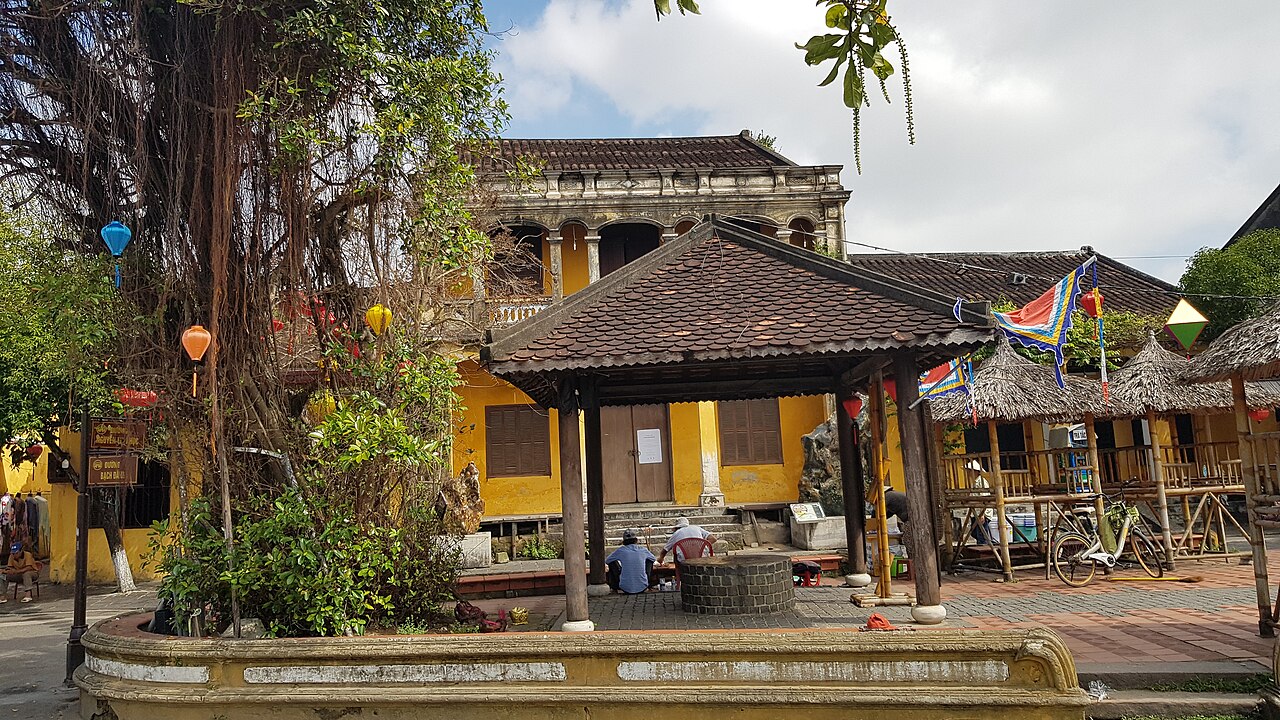
Hoi An Ancient Town. Photograph: Andre Hospers, 1 March 2025 (according to Exif data). Wikimedia Commons, CC BY 4.0. Source web-size image; no crop, colour adjustment or retouching by Enlighten Chakra.

The familiar Hoi An photograph is full of colour after dark. It is an appealing reason to go, but a poor basis for the whole itinerary. Daylight gives you a better chance to notice the buildings and street pattern. Evening can be a second encounter with a place you already understand a little.
Our suggested approach: make one short daylight walk the core of your visit, take a proper break, and treat the evening as an optional return. This is a planning guide, not a claim that every attraction or street has the same access arrangements.
Why the trading-town story matters
UNESCO describes Hoi An Ancient Town as a South-East Asian trading port shaped between the fifteenth and nineteenth centuries. Its buildings and street plan reflect local traditions and outside influences. That gives your walk a useful subject: how a town organised around exchange holds together as a place, rather than a collection of individual sights.
Begin by locating the historic town and the river on a current map. Mark your accommodation or arrival point, then choose a compact area to explore. Look for a route that returns you to a familiar point. A small loop is easier to adjust than a chain of reservations spread across the day.
Use daylight for the details
Choose a street frontage and spend a few minutes looking before you photograph it. Notice how the roofline meets the next building, how an entrance faces the street and where shade changes your view. These are observation prompts, not a test of whether you can identify an architectural style.
If you want to enter a historic building or cultural venue, choose it deliberately. Check that venue’s current admission arrangements and opening information before making it essential. A town walk and a visit inside a managed property are different parts of the plan; do not assume one permission covers both.
| When | Give your attention to | A useful result |
|---|---|---|
| Daylight | Building frontages and the relationship between streets and river | A simple mental map and one architectural detail |
| A break | Food, water and the next decision | A comfortable choice about whether to return |
| Evening | How light and activity change a familiar view | A comparison, rather than another checklist |
Return to a place you can recognise
For the evening, pick one location you have already seen. Compare the same frontage or street view in different light. What can you see less clearly? What becomes more noticeable? This makes a second walk feel like a continuation instead of a search for a famous camera angle.
Keep optional activities separate. A boat outing, shopping appointment or workshop can each become a substantial part of the visit. Before paying, ask what is included, where it starts and ends, and how you will return. Do not build the evening around a social-media claim about an event date without checking a current local source.
Leave space in the plan
Before travelling, check weather and any local access advisories for your dates. On the day, use current signs and local guidance to adjust the walk. If water, weather or a closure affects a route, choose another permitted route or postpone that section. Do not force an itinerary because a photograph made it look simple.
A good visit can end after the daylight walk. That is particularly useful when travelling with someone who tires quickly or prefers a quieter pace. Decide on one thing you want to notice, one place you may enter and one comfortable way back. Everything else can remain a choice.
For a way to keep the two views together, use the two-page city-break journal. If the relationship between a historic town and its edge interests you, read our Galle Fort first-visit guide next.
Source note: heritage context checked against UNESCO on 31 October 2026. The daylight/evening structure is an editorial suggestion. This guide does not quote current opening hours, ticket prices, weather conditions or event schedules.
Keep your Hoi An day bag practical
For the daylight and evening plan, pack only what you need between stops and check the forecast before adding rain protection.
Affiliate disclosure: As an Amazon Associate I earn from qualifying purchases. The shopping links below open Amazon search results; they are not hands-on product reviews. Check the seller, dimensions, delivery and current price before buying.
Small daypack: Check empty weight, shoulder straps and space for your daily essentials. Compare on Amazon India.
Compact rain cover: Match the cover to your bag; check the weather before packing. Compare on Amazon India.
Shopping outside India? See the packing comparison with India and US store options.
Turn this guide into your own trip
Use our free route and budget worksheet, or request a quotation for Hoi An itinerary research. Include your dates, starting point, group size, walking preferences and budget range. If you’re comparing hotels, tours or transfers, use the travel booking checklist to check inclusions and refund terms before paying. Research scope, fees and delivery are agreed before work begins; travel bookings remain with you.
Leave a Reply