
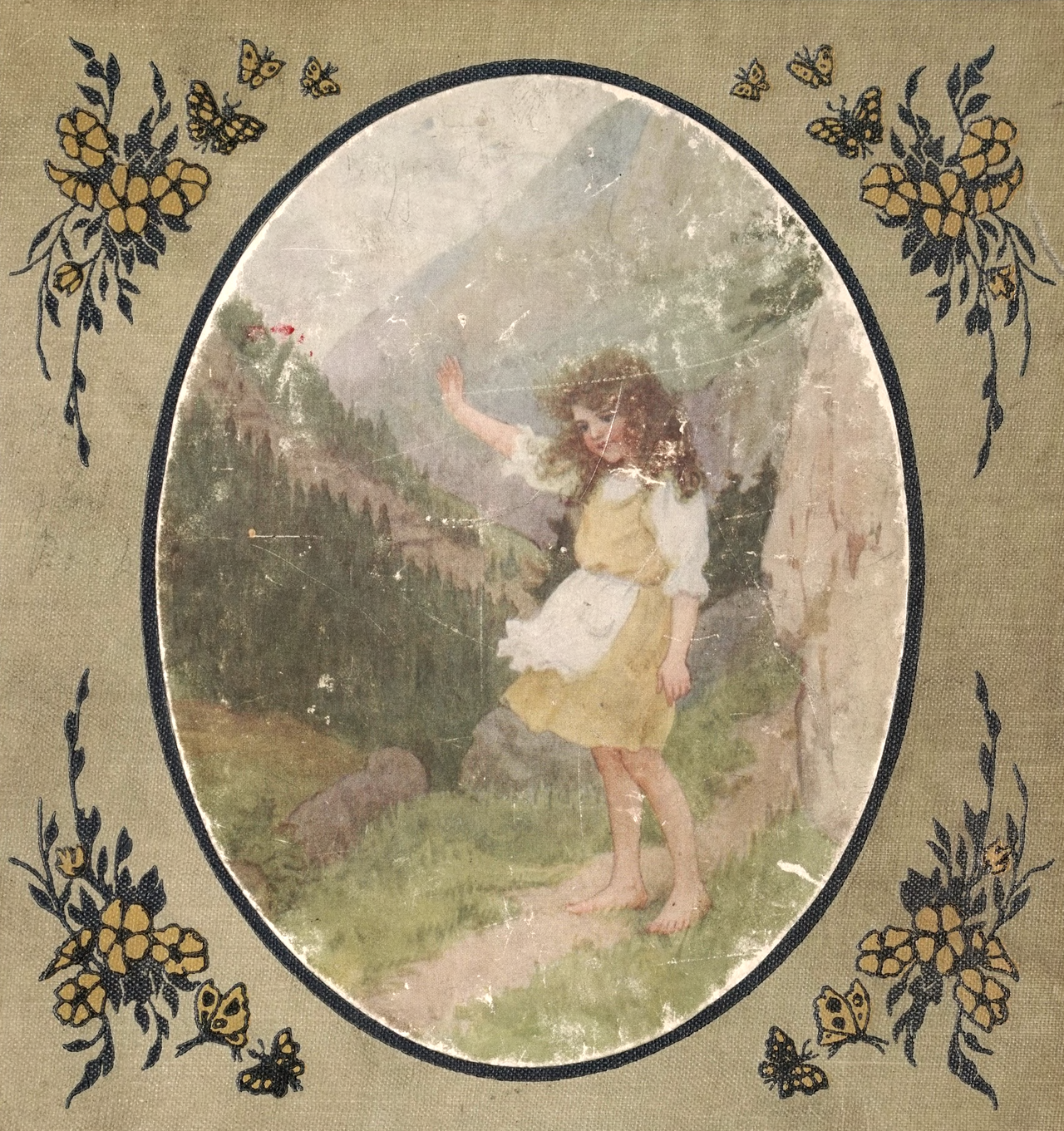
Heidi, historical 1919 edition cover; illustrations credited to Maria L. Kirk, text by Johanna Spyri. Wikimedia Commons public-domain record. Source web-size image; no edits by Enlighten Chakra.

Two books with Heidi on the cover may offer different reading experiences. One may be a complete translation, another a shortened retelling, and another a heavily illustrated adaptation. Before comparing prices or choosing the prettiest cover, establish what text you are buying.
Begin with the edition information
Johanna Spyri’s story was written in German. One historical English version available through Project Gutenberg credits Elisabeth P. Stork as translator and Maria Louise Kirk as illustrator. Its online title page identifies a 1919 gift edition. That is a concrete example of why the people named inside the book matter alongside the author on the cover.
This is not a recommendation that an older translation is automatically the best choice. It is a reminder to identify the version. A modern translation and a historical one can use different language; choose from actual samples rather than assuming that every English Heidi is identical.
| Check | Where to look | What it helps you decide |
|---|---|---|
| Translator | Title page, copyright page or publisher description | Which English version you are reading |
| Complete or adapted | Publisher description and edition notes | Whether you want the novel or a retelling |
| Illustrator | Title page and sample pages | How pictures contribute to the experience |
| Layout | A real page sample | Whether the type and spacing suit the reader |
Compare the same passage, not two random pages
If you have samples from two editions, find the opening in both. Read a few paragraphs at a natural pace. Notice sentence length, unfamiliar words and how easily you can follow who is speaking. Do not judge one version by an exciting scene and the other by a descriptive passage.
For a shared read, read the sample aloud. A layout that looks attractive on a product thumbnail may be tiring to use for an evening session. Check whether illustrations interrupt or support the reading in a way you enjoy.
If the seller does not identify the translator or adaptation status, look for the publisher’s own description. If it remains unclear, choose a listing that provides enough information. A familiar title does not remove the need for an edition check.
Use a digital sample as a trial, not a verdict
The Stork text provides a way to try the opening without committing to a print purchase. Project Gutenberg explains the conditions for using its texts in different countries. A historical digital edition can help you discover whether the story interests you, while a modern print copy may still be the format you prefer.
The archival cover shown above belongs to the historical 1919 edition. It is included as context, not as a photograph of a currently available product or an assurance that a modern listing contains the same illustrations.
A first reading question that travels across editions
As Heidi enters a new place, notice the difference between what adults tell her and what she discovers through experience. Keep one short note about an expectation and one about an observation. You can begin there without needing a full plot summary.
If reading together, ask what makes a place feel unfamiliar or welcoming in the passage. Keep the discussion tied to the text and let a reader decide whether to share anything personal. One useful question is enough for a first session.
Choose for the reader you have
A shorter adaptation can be a deliberate choice for a listener who wants a brief story. A complete translation can suit someone who wants more of the original narrative. Neither choice needs to be disguised as the other. Check the description so you know which experience you are choosing.
For younger readers, preview the text rather than relying only on an age label. Leave room to discuss separation, illness and difficult behaviour if they arise. Treat fictional portrayals of health and recovery as part of the story, rather than medical advice.
For another edition-selection example, see our Secret Garden introduction. For a small reading plan to try afterwards, use Anne of Green Gables: three opening surprises. Browse Books & Reading for more guides.
Source note: the historical edition’s translation, illustration and publication credits were checked against its Project Gutenberg title page on 31 October 2026. The comparison method is original editorial advice; no current retailer stock or prices are claimed.
Leave a Reply